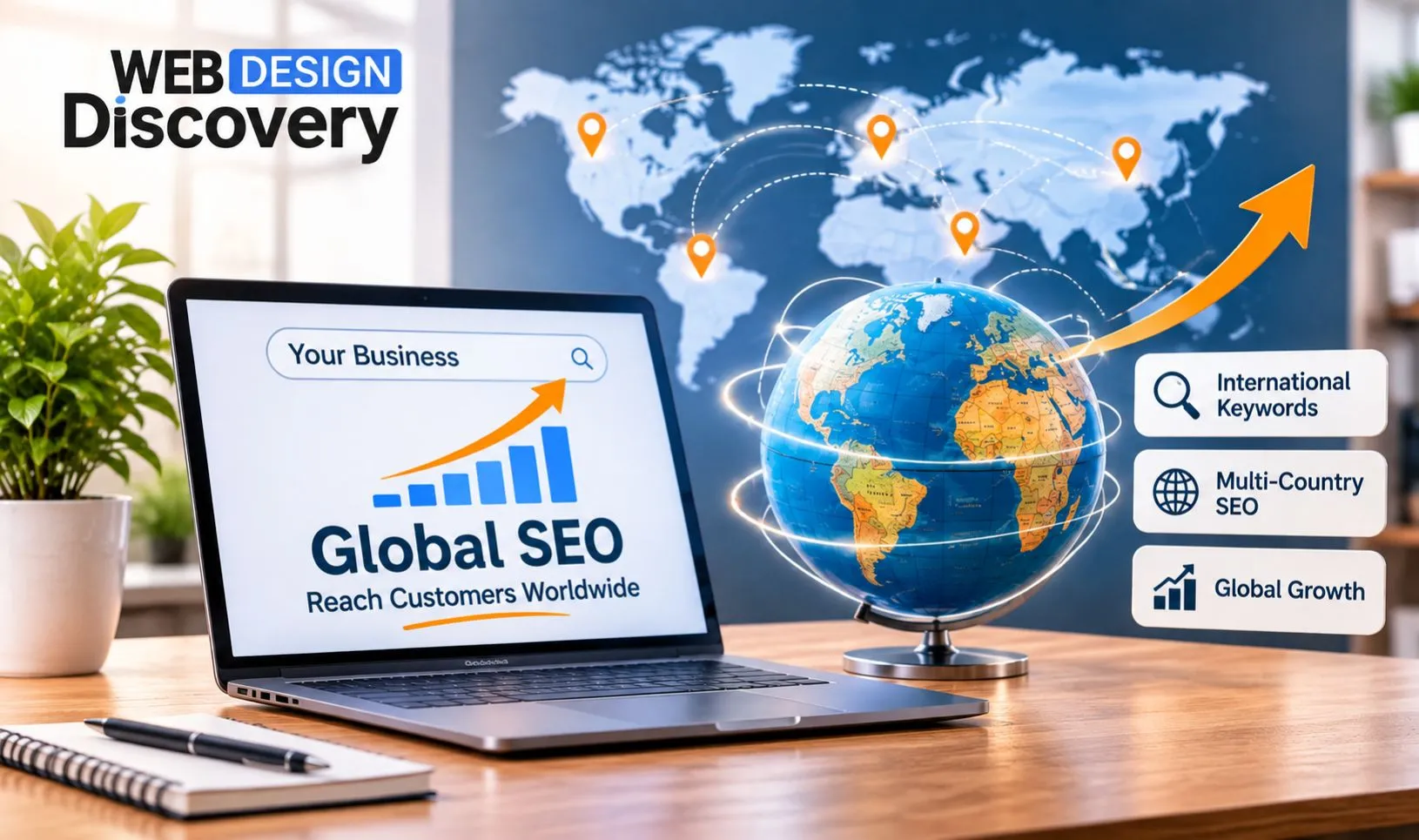
A global SEO agency will ensure that the company reaches international customers by increasing their search visibility in various countries through keyword research in individual countries, multi-language content, technical SEO, and other region-wise strategies.
The entry into the international market is not enough for companies because there are many factors they should consider to expand in international locations.
A global SEO agency provides various services for businesses to increase their search visibility in different regions or countries. Some of the services provided by a global SEO agency are:
If an Indian software company aims at expanding its business in the US, UK, and Australia then they need a different strategy for each of them.
It enables the search engines to identify which web pages of the websites are relevant to the users in those respective regions and languages.
The keywords which work well in India may not be equally popular in other countries as well. Not only different languages use different keywords but even English has different keyword usage depending on where it is used.
For instance, the software company might need:
An international SEO company conducts keyword research for all the target countries in different ways.
Each country has its own set of competitors, its own customer demands and search patterns.
Instead of adding new country names to already existing web pages, the business should create new pages for their targeted market.
When companies enter non-English speaking markets, they will be required to create multilingual websites.
This is because directly translating the contents will not be effective. This is because the content will have to incorporate local languages, local search practices and cultural considerations.
In multilingual SEO strategy, some of the things that are incorporated include proper translation of content, local keywords, product descriptions, calls to actions and reviews.
HREFlang tags are used by Google to understand the language and regional variants of the pages.
For instance, there may be English pages for different regions including US and UK and a French page for French speakers.
Proper use will ensure that search engines know the version meant for each audience.
Google recommends valid language codes, self-reference annotations and return links.
Technical SEO allows international websites to be crawled, indexed, and accessed correctly.
Key aspects to consider are:
URLs: Decide whether to use domain name, subdomain, or subdirectory.
Speed of your site: Utilize images optimization and proper hosting.
Mobile optimization: Make sure sites work on various devices.
Indexing: Have proper sitemaps, links, and canonicals.
Duplicate content: Create unique pages for countries, not publish the same content everywhere.
Relevant backlinks can help businesses build credibility in international markets.
Companies can earn links through industry publications, local business partnerships, expert contributions and useful research-based content.
The focus should be on relevant, trustworthy websites rather than collecting unrelated backlinks.
Businesses expanding into multiple countries may face several challenges:
A structured international SEO strategy helps businesses address these challenges.
First, businesses need to find out which nations have potential and which ones don’t.
Think about customer demand, competition, shipping facilities, and support available.
Then, make landing pages for those countries you consider important.
Provide relevant services, local language and content that will interest regional customers.
Produce helpful blogs and guides that relate to local searches. Make contact with relevant industry sites. Make it easy for international visitors to comprehend your services and contact your firm.
In such a way, it becomes easier to attract customers.
The tracking of performance is needed to know what markets are worth working with.
Key metrics are:
| Metric | Purpose |
| Organic traffic by country | Measures international visitors |
| Keyword rankings | Tracks search visibility |
| Search impressions | Shows how often pages appear |
| Click-through rate | Measures search result engagement |
| Organic conversions | Tracks leads and sales |
| Backlinks | Measures relevant link growth |
Google Search Console helps monitor search performance by country, query and page. Google Analytics 4 provides additional information about traffic, user behaviour and conversions.
Businesses should focus on qualified leads and sales rather than traffic growth alone.
Before selecting an agency to work with, you should consider:
International experience: Evaluate its experience in relation to other countries.
Technical know-how: Make sure it knows how to optimize hreflang, international URLs, and indexation.
Content optimization: Find out about its ability to manage multilingual content and localization.
Performance reports: Look for agencies that can offer transparent performance reports and measurable objectives.
Realistic expectations: You shouldn’t expect from an agency guaranteed rankings or overnight results.
A reliable agency will always be able to tell you what to expect and its approach to achieving goals.
Companies that want to expand globally should have a strategy combining website performance and SEO.
Webdesign Discovery gives companies an opportunity to find website and digital marketing solutions. When working on international SEO, businesses should focus on technical optimization and relevant content.
Reaching international customers requires more than publishing a website for a global audience. Businesses need relevant keywords, localised content, technical optimisation and a clear understanding of regional search behaviour.
A capable global SEO agency can bring these elements together to improve international visibility and attract relevant customers. Starting with priority markets and measurable business goals can help build a sustainable international SEO strategy.
Frequently Asked Questions
A global SEO agency improves website visibility across different countries through international keyword research, technical SEO, multilingual content and regional optimisation.
Local SEO targets customers in a specific geographical area, while international SEO focuses on multiple countries or language groups.
There is no fixed timeline. Results depend on competition, website authority, technical condition, content quality and target markets.
No. Businesses can use one domain with country-specific subdirectories, subdomains or separate country-code domains, depending on their requirements.
Use Google Search Console and Google Analytics 4 to monitor country-specific traffic, keyword visibility, impressions, conversions and qualified leads.
 +91 9465573673
 creative_preet
 info@webdesigndiscovery.com