When you talk about SEO, you tend to think of keywords, backlinks, and content quality. However, one thing that gets overlooked by many website owners is metadata SEO.
The function of metadata is quite simple. This piece of information will tell search engines about your web pages. It will also help users determine whether or not they should click through and check your website out. Despite being invisible on the page itself, metadata is an important component when it comes to increasing visibility and click-through rates.
To put it simply, metadata provides users with a quick overview of your web page. It lets Google know about the essence of your page, providing users with an incentive to click through and check it out themselves.
In modern times, Google is focused on user experience above all. This is the reason why metadata is so important for modern SEO. Metadata can help you increase your click-through rates and, thus, attract more users even if your rankings don’t improve.
This guide talks about everything you need to know about metadata and SEO.
Metadata for SEO is the information added to the webpages that help search engines make sense of the content in the pages.
Some examples of SEO metadata are:
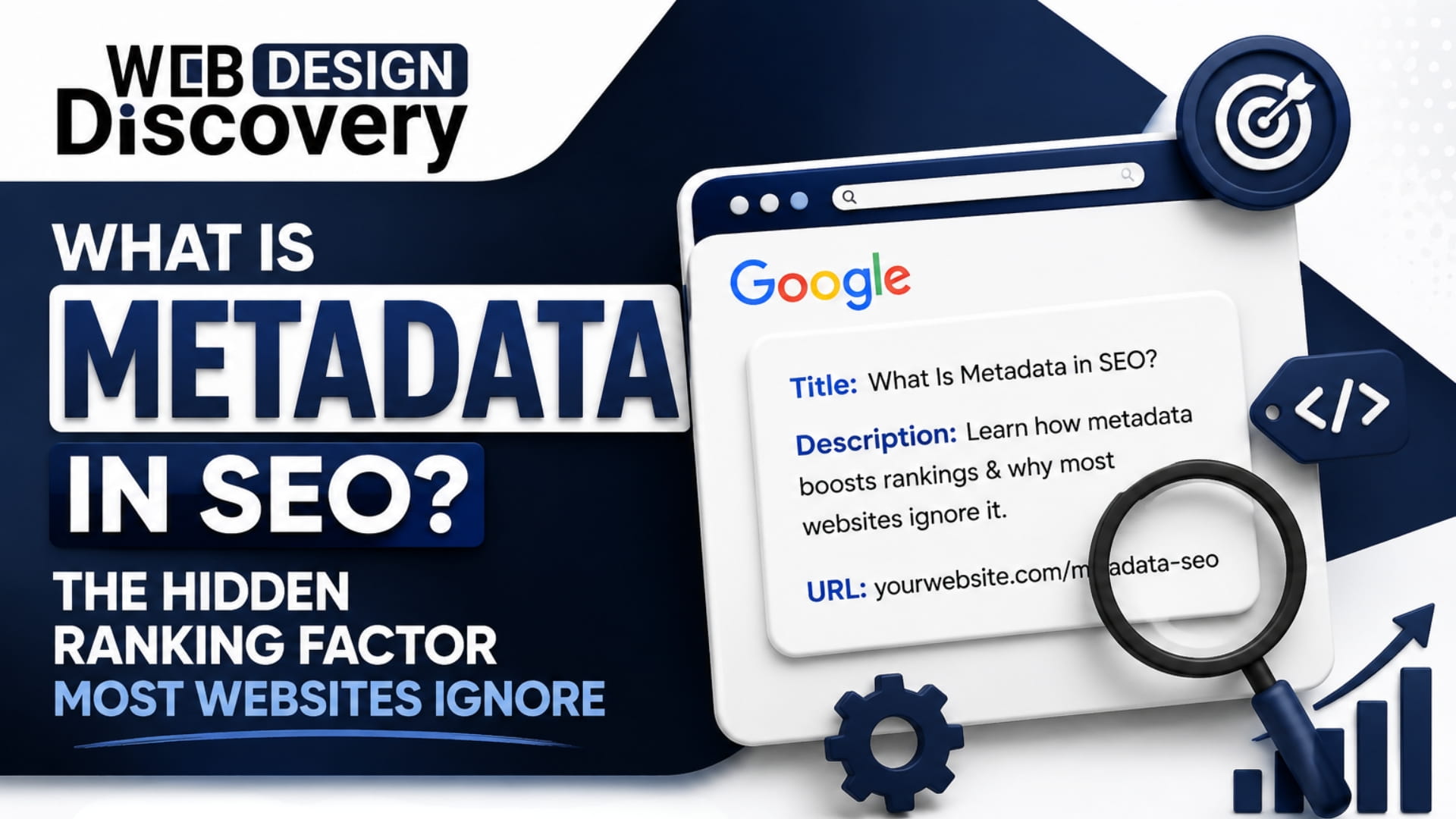
SEO metadata is generally put into the HTML codes of webpages. However, while people visiting the webpage cannot see metadata in their pages, they can see it on the search engine pages.
For example:
The first blue text you see when searching something in Google is generally the title tag of the webpage.
And the following short text just below the title tag is the meta description of the webpage.
SEO metadata is useful for both search engines and visitors.
Metadata is known as a “hidden” ranking signal since users do not always see it, yet it plays an influential role in SEO results.
Google applies metadata to determine the relevance of a page. Proper metadata writing contributes to improving:
Though meta descriptions are not directly connected with the ranking process, they affect clicks, which positively impacts SEO performance in the long term.
In contrast, title tags serve as direct ranking factors. Google applies title tags to identify what the page is about.
This is how metadata and SEO complement each other.
The title tag is the most essential metadata component for SEO. This is the clickable title that appears on Google search results.
Best practices include:
Example:
What Is Metadata in SEO? Complete Beginner’s Guide
Meta descriptions provide a brief overview of your webpage’s content.
They entice users to visit your webpage.
Optimal ways of writing meta descriptions include:
Sample:
Find out the meaning of metadata SEO and how to optimize your metadata.
These keywords inform search engines to either index the page or not.
Examples:
Alternative text explains images to search engines and accessibility programs. Effective alternative text enhances the SEO and accessibility of images.
Canonical Tags Eliminate Duplicates. These tags inform Google about the canonical page version.
SEO metadata enhances the interpretation of your content by search engines.
Below are the ways that metadata influences ranking and visibility:
Better Keyword Relevance
The use of title tags allows Google to comprehend page themes. Use of relevant keywords will increase topical relevance.
Increased Click-Through Rate
Quality meta descriptions result in more clicks. A higher click-through rate may boost organic traffic.
Enhanced User Experience
Well-written metadata informs users of what to expect when they click.
Quicker Search Engine Comprehension
Metadata offers context instantly. This makes it easy for search engines to crawl and index pages.
By adhering to SEO metadata best practices, you can achieve better results.
Use Unique Metadata in Each Page
Use Keywords Organically
Write Concise Metadata
Align Your Content with User Intent
Consider using words such as
to increase click-through rates.
Avoid Misleading Information
There are common SEO metadata mistakes that cost a lot of website traffic.
Lack of Meta Descriptions
Random snippets can be generated by Google.
Duplicate Title Tags
It is confusing to search engines.
Keyword Stuffing
Metadata appears spammy when there are too many keywords.
Overlong Titles
They might get truncated in search engine listings.
Generic Metadata
Titles such as “Home” and “Services” are not valuable for SEO.
Mobile Search Neglect
Metadata needs to look great on desktop and mobile browsers.
Good metadata helps improve CTR and user engagement. Some effective recommendations are as follows:
Know Your Audience’s Intentions
Example:
“7 Tips for Writing Metadata for Better Search Rankings”
Contribute Something Valuable
Let users know why they should visit the page.
Create Curiosity
Interesting titles make people curious.
Make Use of a Strong Call-to-Action (CTA)
Examples:
Good Title Tag Example
Metadata SEO Guide: Best Practices for Better Rankings
Why does it Work?
Good Meta Description Example
Find out how using metadata for SEO can increase your rankings and improve search engine understanding.
Why does it Work?
Bad Metadata Example
SEO SEO Metadata Best SEO Metadata SEO
Why Doesn’t It Work?
There are several tools that can be used to evaluate metadata and SEO effectiveness.
Google Search Console
Reports on impressions, clicks, and CTR.
Yoast SEO
WordPress plugin used for metadata improvement.
Rank Math
Enables quick metadata optimization.
Screaming Frog SEO Spider
Detects any missing or duplicated metadata.
Ahrefs & SEMrush
Keyword research and competitive analysis.
Manual Analysis
Always review your metadata before posting it.
Ask yourself:
Many people confuse metadata with keywords.
Here is the difference:
| Metadata | Keywords |
| Information about the webpage | Search terms users type |
| Helps search engines understand content | Helps target search intent |
| Includes titles and descriptions | Used inside content and metadata |
| Improves CTR and indexing | Improves topic relevance |
Keywords are part of metadata, but metadata includes much more.
Metadata for SEO and schema markup both work to benefit the search engine, but they differ from each other.
SEO Metadata
Serves as basic information on the page.
Examples include:
Schema Markup
Serves as structured data.
Allows Google to show:
Before launching any website, ensure that the following criteria are met:
One of the easiest forms of SEO you could implement is through metadata SEO. While metadata SEO may be under the surface, its impact cannot be ignored because it directly impacts user interaction with your website and the search engine.
SEO metadata is useful for making Google get to know your website better. It will encourage users to click on your website rather than that of your competitor.
SEO today goes beyond ranking on Google; it’s more about enhancing user experience and getting clicks. If your website wants to achieve better online visibility through effective SEO strategies, metadata is one such tool that should not be overlooked.
Improve your SEO today with our SEO metadata services offered at Webdesign Discovery.
Metadata in SEO is information that describes a webpage to search engines and users. It includes title tags, meta descriptions, and other HTML elements.
Title tags directly affect rankings. Meta descriptions do not directly affect rankings, but they improve click-through rates, which can help SEO performance.
The ideal title tag length is 50–60 characters. Meta descriptions should stay between 150–160 characters.
Google may automatically generate a description from your page content. This may reduce click-through rates if the snippet is unclear.
Review metadata every few months or whenever content changes significantly. Update it if rankings or click-through rates drop.
Title tags are more important for rankings. Meta descriptions are more important for improving clicks and user engagement.
 +91 9465573673
  creative_preet
  info@webdesigndiscovery.com