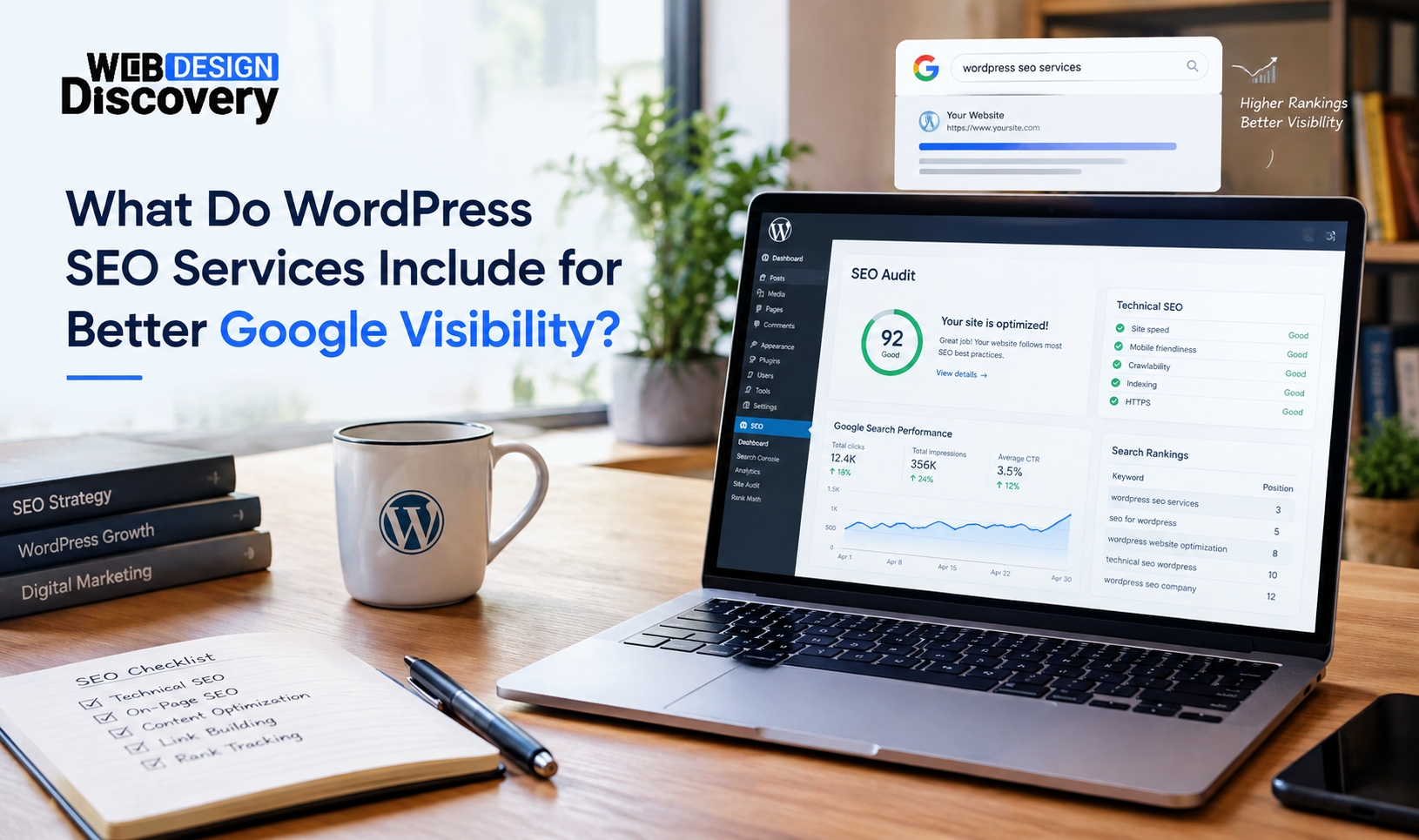
SEO services for WordPress go far beyond putting keywords in blog posts. An effective SEO strategy should include a combination of technical tweaks, search intent analysis, content optimization, internal linking, performance optimization, local/commercial SEO, and regular measurement.
In case the website on WordPress is hard to crawl for Google or doesn’t provide answers to users’ questions, then writing more content won’t always solve the issue.
The first thing to do is to determine what’s working for you and what stands in your way.
An audit may include:
The main goal is not to create a long list of everything to do.
The most important goal is to find out the problems which may influence the website performance or the experience of the visitors.
Keyword research is still necessary, but only finding keywords with lots of searches is not sufficient.
What do people actually want by searching for this phrase?
A user who is looking for “WordPress SEO services” may need:
Otherwise, you will make a common mistake – creating a page which has the target keyword but does not provide the information needed by the person.
Your WordPress website becomes cluttered as the number of pages, categories, tags and blog posts increases.
An effective SEO structure allows you to easily find your important pages.
For example:
Home > Services > WordPress SEO Services > Technical SEO
This structure will allow users to know where they are and help search engines to understand how pages relate to each other.
Google provides guidelines on making websites easier to crawl, understand and navigate for search engines.
On-page SEO involves improving individual pages so that their purpose is clear.
This can include:
The goal is not to repeat a keyword 20 times.
In fact, forced repetition can make content worse for the reader.
A good service page should clearly explain what is offered, who it is for, what problems it solves and what the visitor should do next.
Technical SEO is particularly important on WordPress because plugins, themes and custom functionality can introduce problems.
Technical seo services for wordpress may address:
These tasks require more than installing an SEO plugin.
A plugin can help manage certain settings, but it cannot automatically fix every technical SEO problem.
Website speed affects the user experience, particularly on mobile devices.
Google states that Core Web Vitals are among the page-experience considerations used by its ranking systems, while also making clear that there is no single “page experience signal” that guarantees rankings.
For WordPress sites, performance work may include:
The important point is to optimise based on actual problems rather than blindly chasing a perfect score.
Old content can become a significant SEO asset when properly reviewed.
An SEO team may identify pages that:
For example, a service page ranking on page two may not need to be completely rewritten.
It may need a clearer answer near the top, better supporting sections, stronger internal links and improved topical coverage.
That is a more useful approach than rewriting every page from scratch.
Internal linking is frequently neglected.
An optimal internal linking strategy allows users to find relevant information, and also gives search engines more context regarding the site pages.
For instance, a blog on technical WordPress SEO can link to:
Including hundreds of internal links just because they have relevant keywords doesn’t improve your website at all.
Structured data allows Google to understand more information about the page content.
Google states that the use of structured data may assist it to understand content and potentially be eligible for specific enhanced search features. However, the proper use of structured data doesn’t mean that Google will actually render a rich snippet.
The relevant structured data for WordPress sites may include:
The markup must be true for visible page content.
Including schema to get rich results is not the same as having useful content.
If the website represents a local business, WordPress SEO services may also include local optimisation.
This can involve:
The important part is making each location page genuinely useful.
Creating dozens of near-identical pages with only the city name changed is unlikely to provide a strong user experience.
SEO should be measured against meaningful business outcomes.
Useful metrics can include:
Traffic alone can be misleading.
A website may receive thousands of visits from informational searches while generating very few qualified enquiries.
A smaller amount of highly relevant traffic can sometimes be more commercially useful.
A good SEO report would not say just:
“Your traffic has increased by 20 percent.”
It would explain:
Thus, SEO becomes a better investment option to assess.
Webdesign Discovery is able to integrate web design, web development and SEO aspects rather than keeping them completely separated from each other.
It is important since design alterations may influence headers, navigation, page load time, URLs, links structure, etc.
So, the best services of WordPress are not only about adding keywords on the existing pages.
It means making the site more easily accessible, more understandable and useful for those who are looking for its services.
If you have got a lot of visits to your WordPress site but very few relevant enquiries, it is time for a thorough SEO audit.
What are WordPress SEO services?
They are SEO activities designed for WordPress websites, including technical SEO, keyword research, on-page optimisation, content, internal linking, performance and measurement.
Are SEO plugins enough for WordPress SEO?
No. Plugins can assist with certain SEO tasks, but they do not replace strategy, content optimisation, technical auditing or performance work.
How long does WordPress SEO take to show results?
There is no universal timeline. Google states that changes can take from hours to several months to be reflected in search results.
Does website speed affect SEO?
Page experience and Core Web Vitals are considered by Google’s ranking systems, but speed is only one part of a broader search system.
Should every WordPress page target a keyword?
Every important page should have a clear purpose and search intent, but forcing a separate keyword onto every page can create unnecessary or overlapping content.
Can structured data guarantee rich results?
No. Google states that valid structured data can make a page eligible for certain search features, but Google does not guarantee that those features will appear.
What should I look for when choosing an SEO agency?
Look for clear reporting, realistic expectations, evidence of technical and content expertise, transparent deliverables and a strategy connected to your business goals.
 +91 9465573673
  creative_preet
  info@webdesigndiscovery.com