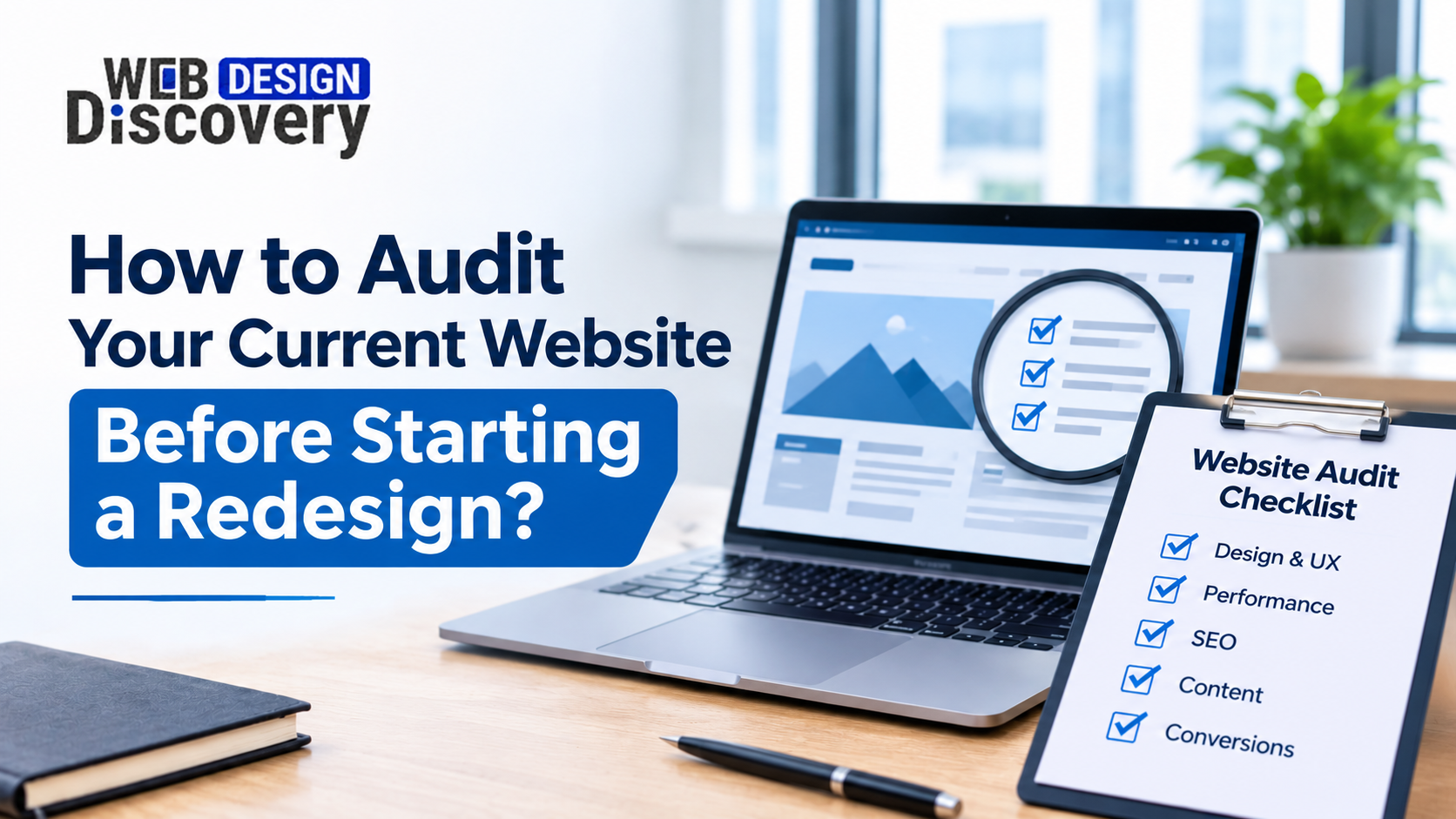
The process of website audit before redesign includes assessing your current website in terms of design, functionality, performance, SEO, content, and user experience. The main aim of this activity is to determine how you need to redesign your website, what should be changed, improved, and what you should get rid of. A proper audit also allows avoiding the loss of positions in search results and traffic after redesigning the website.
A website redesign audit is an analysis of the current state of affairs with regard to your website. It allows businesses to understand what needs to be changed and what not.
Through audit you will be able to:
Let’s start with looking at the general look of your website. Do its colors, fonts, pictures, layouts, and visuals fit your brand image?
Look for out-of-date visuals, font inconsistencies, crowded pages, and unclear calls to action. Look for the availability of essential information as well.
Ask yourself:
During a UX audit of your website, you need to pay attention to the convenience of visiting your website from mobile devices.
Open important pages on smartphones, tablets, and computers. Make sure that texts are readable, images take up all the space correctly, buttons can be tapped conveniently, and menus function properly.
Pay attention to:
Website speed affects how visitors interact with your pages. A website performance audit helps identify slow-loading elements and technical problems.
Use Google PageSpeed Insights to evaluate page performance and review Core Web Vitals, including Largest Contentful Paint (LCP), Interaction to Next Paint (INP), and Cumulative Layout Shift (CLS).
Check for large image files, unnecessary scripts, excessive redirects, and outdated plugins. These issues may affect loading speed and usability.
Record the results for important landing pages so improvements can be measured after the redesign.
Website SEO Audit is necessary before URL changes, structural changes, or content updates on a website.
To perform the SEO Audit of a website, use Google Search Console to get information about keyword rankings, search impressions, clicks, indexing problems, and pages with highest performance.
Existing content analysis should include:
Avoid deleting high performance pages without performing an SEO Audit first.
The absence of certain pages and links and technical problems may influence navigation and crawling processes on a website.
Use a crawler tool to find any broken internal and external links, 404 error pages, redirect chains, duplicate URLs, and metadata problems.
Check also your XML Sitemap, Robots.txt, Canonical Tags, and HTTPS setup.
Your existing website may already be generating leads or sales, even if its design looks outdated.
Review Google Analytics 4 data to identify popular landing pages, conversion events, traffic sources, and visitor journeys.
Check which pages generate enquiries, where visitors leave, and whether contact forms are completed successfully.
Heatmaps and session recordings can also help identify confusing navigation, overlooked buttons, and areas where visitors struggle.
These insights help create a redesign focused on business goals rather than appearance alone.
Once the audit is complete, divide website elements into three categories:
Keep: Retain high-performing pages, valuable content, useful features, strong backlinks, and effective conversion elements.
Improve: Update outdated layouts, navigation, page speed, mobile responsiveness, content quality, and calls to action.
Remove: Eliminate duplicate content, irrelevant pages, outdated information, broken features, and unnecessary plugins.
Create a documented list to guide designers and developers throughout the redesign process.
If you need professional website redesign services, there are several reasons such as persistent usability issues, out-of-date brand image, limitations in technical capabilities, lack of responsiveness, and inability to grow your business.
A skilled Website Design Company will be able to use the results of your audit and create a strategic plan for your website redesign. Webdesign Discovery is aimed at helping businesses perform website redesign considering design, functionality, responsiveness, and business needs.
Professional assistance will help to consider important SEO aspects during the process of redesigning.
1. What items should be checked before website redesign?
Design, mobile performance, website speed, SEO performance, content quality, technical issues, user experience, and conversion rates should be analyzed.
2. How much time will a website redesign audit take?
This will depend on the size of the website, its complexity and amount of pages. Website audit of a smaller website takes less time than of a larger one.
3. Should I conduct an SEO audit before website redesign?
Yes, you definitely need to do that. It will help you understand which keywords, backlinks, indexed pages and ranking positions should be saved after the redesign.
4. Can website redesign influence my Google rankings?
Yes, redesign may influence your ranking positions negatively. But proper redirect configuration and SEO audit will minimize your losses.
5. Which tools should I use for website audit?
Google Analytics 4, Google Search Console, Google PageSpeed Insights, and web crawlers can be useful for that.
An audit of your website prior to a redesign allows you to base your decisions on a good understanding of your current online presence. An analysis of your site’s design, SEO, performance, technical aspects and behavior allows you to understand what needs to be improved before starting the development process.
 +91 9465573673
 creative_preet
 info@webdesigndiscovery.com